Assisted Reproductive Technology
IVF is the most effective fertility treatment available — and at IRFC, it is supported by a #1-ranked laboratory team, EmbryoScope+ time-lapse monitoring, and physicians who have guided thousands of families to success.
In vitro fertilization (IVF) is a process in which eggs are retrieved from the ovaries, fertilized with sperm in the laboratory, and the resulting embryos are cultured for several days before the best candidate is transferred to the uterus.
IVF bypasses the most common causes of infertility — including blocked fallopian tubes, male factor, ovulation disorders, and unexplained infertility — by bringing the egg and sperm together under controlled, optimized laboratory conditions.
IRFC's IVF program includes optional add-ons such as ICSI, assisted hatching, preimplantation genetic testing (PGT), and mild-stimulation protocols — all tailored to each patient's individual profile.
IVF may be recommended if you have:
No two cycles are identical, but every IRFC patient follows a carefully structured process designed for safety, comfort, and the best possible outcome.
Your physician reviews your complete medical history and orders baseline tests: bloodwork (hormonal panel, AMH, CBC), antral follicle count via ultrasound, and — for couples — a semen analysis. This workup paints a complete picture before any decision is made.
Over 8–14 days, injectable medications stimulate your ovaries to develop multiple mature follicles. Our nurses guide you through every injection, and you return for monitoring ultrasounds and blood draws to track response and adjust dosing precisely.
When follicles reach optimal size, a precisely timed trigger shot matures the eggs. Approximately 36 hours later, eggs are retrieved under light sedation via a transvaginal ultrasound-guided needle. The procedure takes about 20 minutes; most patients go home the same morning.
Mature eggs are fertilized with prepared sperm — either by conventional insemination or ICSI (intracytoplasmic sperm injection). Resulting embryos develop in our EmbryoScope+ incubators, which capture time-lapse video without disturbing the culture environment.
Our embryologists observe development daily. By day 5–6, embryos that have reached the blastocyst stage are assessed for quality. If PGT-A testing is ordered, embryos are biopsied and sent for chromosomal analysis before transfer.
The highest-quality embryo is placed into the uterus through a thin catheter — a quick, painless procedure performed under ultrasound guidance. Most patients transfer one embryo to maximize safety while preserving excellent success rates.
A blood pregnancy test is performed 10–12 days after transfer. If positive, we monitor closely with HCG levels and an early ultrasound before transitioning care to your OB-GYN or Maternal-Fetal Medicine specialist.
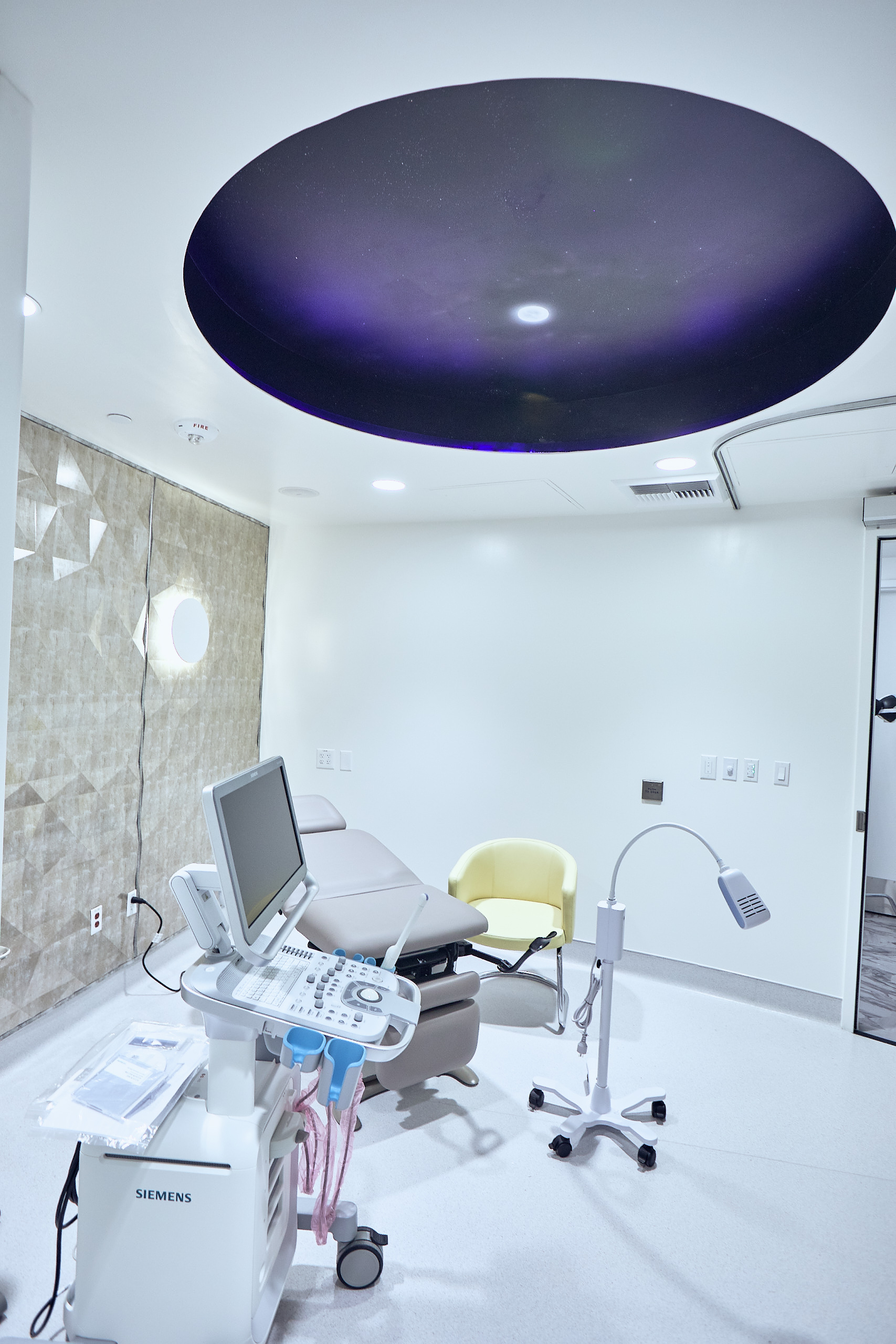
Every transfer suite is designed for calm — because the environment around the transfer matters as much as the science inside it.
Technology
Time-lapse incubation captures continuous embryo development images without disturbing the culture environment.
Technology
Electronic witnessing system ensures your eggs, sperm, and embryos are correctly matched at every step.
Technology
Military-grade cryogenic storage with RFID tracking protects any frozen embryos for your future use.
Most patients conceive within 1–3 cycles, though individual outcomes vary based on age, diagnosis, and embryo quality. Your physician will give you a realistic success rate estimate based on your specific profile during your consultation.
The stimulation injections are mild — most patients describe them as similar to a pinch. The egg retrieval is performed under sedation, so you will not feel it. Post-retrieval bloating and mild cramping are common and typically resolve within a day or two.
A fresh transfer occurs within the same cycle as egg retrieval. A frozen transfer (FET) freezes the embryo and transfers it in a subsequent, separate cycle — which can improve uterine receptivity in some patients. Your physician will recommend the best approach for you.
Yes. Dr. Liu specializes in mild stimulation protocols that reduce medication doses while maintaining strong outcomes for appropriate candidates. These protocols may be a good fit for patients with certain diagnoses or preferences.
Absolutely. IRFC has a comprehensive donor egg program through our partnership with Fairfax EggBank, and coordinates sperm donor selection through licensed cryobanks. Our third-party coordinator guides every step.
Schedule a consultation with one of our physicians. We'll review your history, answer every question, and give you an honest assessment of your options.